Spotify spent years convincing listeners that access to millions of songs was worth a monthly subscription. Now it wants to charge them extra for the privilege of rearranging those songs with artificial intelligence. According to an October 30 report in the Financial Times, Spotify is targeting the first quarter of 2027 for its AI-powered covers and remixes service, with a possible additional charge of $4 to $5 per month for Premium subscribers.
Neither the pricing nor the launch date is final, and Spotify declined to comment on the report. An announcement could arrive around February’s Grammy Awards, although the company has already confirmed that the service is being developed with participating record labels, publishers, artists, and songwriters. What remains unclear is how many musicians will agree to participate, what subscribers will actually be allowed to create, and whether the music industry has discovered another way to charge consumers for recordings it already owns.
Related Reading:
- Spotify Will Label AI Artists And Stop Recommending Them. So Why Is It Letting Fans Remix Real Music With AI?
- Spotify Wants Fans To Remix Real Songs With AI And The Labels Smell Another Payday
What Will Spotify’s AI Remix Service Actually Do?
The concept is straightforward. Premium subscribers would be able to use generative AI to create alternative versions of commercially released songs from artists who have agreed to participate. A folk recording could become a dance track, or a familiar composition could be reimagined as a cover in another artist’s style.
Unlike services such as Suno, which can generate entirely new compositions from text prompts, Spotify’s proposed tool is specifically designed around licensed covers and remixes of existing recordings. The distinction is important because the original music, its creators, and the rights associated with it remain central to the transaction.
Spotify first announced its partnership with Universal Music Group in May, followed by Merlin in August, music publisher Kobalt later that month, and Believe on October 20. The Believe agreement also includes participating artists and labels associated with TuneCore. According to the Financial Times, negotiations with Sony Music Group and Warner Music Group are continuing.
These agreements do not give subscribers unrestricted access to every recording owned by the participating companies. Individual artists must agree to take part, and securing that permission has reportedly been more difficult with some major contemporary performers than with established older artists.
Spotify has also proposed allowing fan-created versions to appear in playlists, with qualifying plays credited to the original recordings on its charts. The precise implementation remains unclear, and chart credit should not be confused with a confirmed royalty calculation.
Why Does Spotify Want to Charge Extra for AI Music?
The answer starts with the economics of streaming.
Spotify reported 306 million Premium subscribers and 788 million monthly active users at the end of September 2026. That’s an enormous audience, but continued growth requires finding new ways to earn more from existing customers rather than relying exclusively on attracting additional subscribers.
A paid AI remix service offers another revenue source without requiring Spotify to build an entirely new music catalog. Participating labels and publishers gain another way to monetize recordings and compositions they already control, while artists and songwriters are promised compensation when fans create and stream licensed versions of their work.
Spotify also has an opportunity to keep subscribers inside its ecosystem. Rather than using external AI music applications to experiment with songs, listeners could create, share, and discover alternative versions directly through Spotify. The company would retain the customer relationship, control the licensed environment, and potentially benefit from increased engagement.
For an industry that has spent two decades moving consumers from purchasing music to renting access to it, charging extra to modify those same recordings is a rather impressive piece of commercial creativity.
Someone in the licensing department deserves a raise. Whether the musicians deserve a larger share is a more interesting question.
Artist Consent and Compensation Remain the Biggest Questions
Spotify says the service is being developed around consent, credit, and compensation. Its October 20 agreement with Believe establishes a two-stage opt-in process for participating artists, with royalties generated from fan-made remixes flowing to the original artists and rights holders.
That’s a meaningful distinction from unauthorized AI voice cloning and the use of copyrighted recordings without permission. But it doesn’t resolve every concern about how the finished product will operate.
How much creative control will participating artists retain? Can they approve certain types of remixes while rejecting others? How will royalties be divided among performers, songwriters, publishers, and labels? And what happens when thousands of AI-generated interpretations of a popular recording begin competing with the original for attention?
These questions matter because the technology could create genuine opportunities for independent musicians and established artists looking to reach younger audiences. It could also flood playlists with derivative recordings whose principal appeal is novelty rather than musical merit.
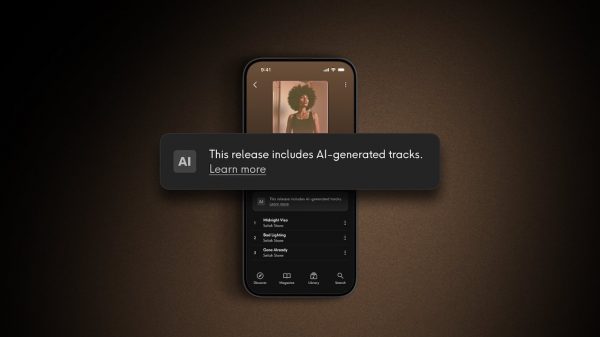
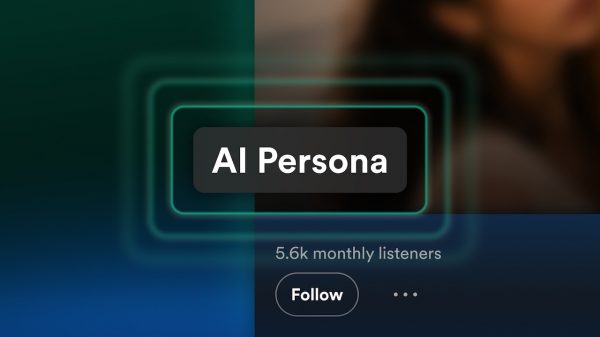
As we’ve previously reported in our coverage of Spotify’s AI Persona labeling policy, the company is simultaneously trying to distinguish legitimate human artists from AI-generated identities and low-value automated content.
Spotify isn’t necessarily contradicting itself by supporting licensed AI remixes while restricting deceptive AI music. But it will need to explain where the boundaries lie and enforce them consistently.
Why This Matters for the Future of Music Streaming
The broader industry is already moving toward licensed AI music. Our recent coverage of Suno v6 and its agreements with Warner, BMG, and Believe examined how generative music companies are attempting to move beyond legal disputes and establish commercial relationships with rights holders.
Meanwhile, TIDAL has taken a different approach to fully AI-generated recordings, introducing disclosure requirements and restrictions on royalty attribution for music it determines was created entirely by generative AI.
Spotify’s proposal adds another dimension: commercial recordings could become interactive material that subscribers pay to manipulate rather than simply listen to. That creates new creative possibilities, but it also raises questions about artistic integrity, ownership, and what a finished recording is supposed to represent.
There is nothing inherently wrong with remixing music. Hip-hop, electronic music, dub, and countless other genres have demonstrated how transformative creative reinterpretation can be. The difference is that generative AI could make the process accessible to millions of subscribers with little technical knowledge or musical training.
Whether that produces worthwhile new interpretations or an avalanche of forgettable material remains an open question.
The Bottom Line
Spotify’s reported $4 to $5 monthly AI remix add-on could become an important new business for streaming, giving participating artists another revenue source while offering fans creative tools that previously required specialized software and considerable technical knowledge.
The licensing framework is encouraging, but artist approval, royalty transparency, and meaningful control over how recordings are altered will determine whether the service deserves the industry’s enthusiasm. Spotify also has to persuade subscribers that transforming songs with AI is worth paying for on top of their existing Premium subscription.
We’ve already examined the broader implications in our earlier report, Spotify Wants Fans to Remix Real Songs With AI and the Labels Smell Another Payday. The newly reported pricing and launch window make that commercial ambition considerably more tangible.
There may be a legitimate market for AI-assisted musical creativity, particularly when the original artists willingly participate and are fairly compensated.
But the music industry has reached an interesting point when listening to a song costs one monthly fee, and changing what the artist recorded could cost another. At this rate, leaving the original recording alone may become the last feature included at no additional charge.
Related Reading:
- Spotify Raises Prices Again — Is It Still Worth It?
- Suno V6 Launches With Warner, BMG And Believe As Licensed AI Music Enters A New Phase
- Qobuz Starts Labeling AI Generated Music And The Fraud Numbers Are Ugly