
Unless you have been living under a rock, you already know that artificial intelligence is everywhere. What is less obvious is that the infrastructure feeding the AI boom is now competing with the televisions, AV receivers, streamers, gaming consoles, wireless headphones, smartphones, and other electronics inside your home.
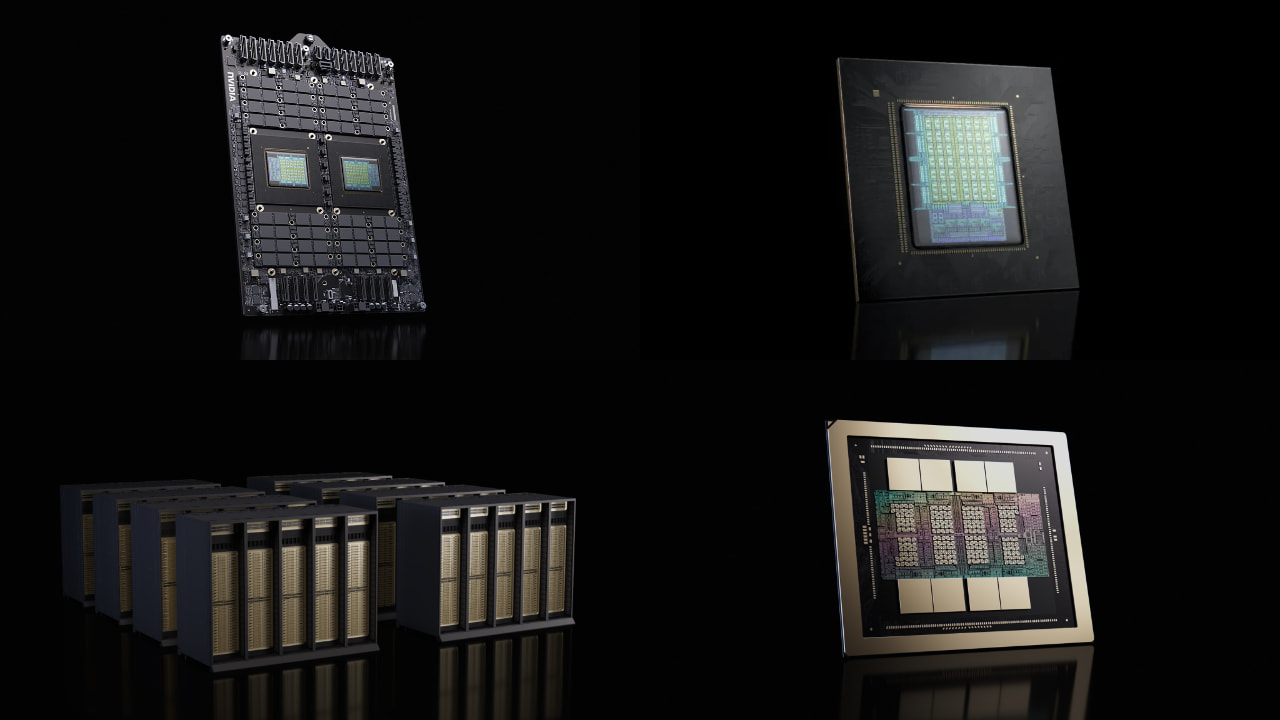
AI data centers require enormous quantities of processors, high-bandwidth memory, DRAM, NAND storage, networking hardware, and power-management components. Chipmakers are directing more production capacity toward these lucrative commercial customers, tightening supplies of conventional memory and other components used throughout the consumer-electronics industry. The problem is no longer confined to expensive AI GPUs or hyperscale server farms.
The impact is already being felt. Memory prices have risen sharply throughout 2026, manufacturers are warning about higher component costs, and Qualcomm has indicated that price increases will be necessary as AI infrastructure demand strains supplies of memory, wafers, packaging, and testing capacity. TrendForce says the DRAM market will remain extremely tight during the third quarter of 2026, with contract prices expected to rise another 13 to 18 percent.
For consumers, that could mean fewer discounts, delayed product launches, longer delivery times, reduced specifications, and higher prices for everything from smart TVs and projectors to network streamers, soundbars, and AV receivers. Some manufacturers may absorb the added expense temporarily, but nobody should expect them to keep doing that indefinitely.
AI may live in the cloud, but consumers are increasingly being asked to pick up the tab at the checkout counter.
Related Reading:
- Sonos Wants AI In Every Room But Does Everyone Actually Want It?
- FiiO Confirms Price Increases Starting April 1, 2026, Citing Chip Costs, Tariffs, And Market Pressure
The AI Shortage Rundown
Chip Making Priorities: Microsoft, Google, and Amazon are redirecting wafer allocations and RAM supply toward enterprise AI hardware, especially for AI data center applications. Samsung, SK Hynix, and Micron are prioritizing high-margin AI-related memory and High Bandwidth Memory (HBM) over conventional DRAM and other chips used in many mainstream consumer products. The result could be a “RAMageddon” for mainstream memory chips.
The Cloud: Cloud providers are panic-buying and locking in long-term supply agreements with makers, further widening the global supply gap. With a large portion of content, program access, and storage utilizing the cloud, any chip shortage needed to support cloud services would stifle access speed and limit storage capacity.
Higher Prices Are Already Here

Apple has already raised prices on several MacBook and iPad models after conceding that it could no longer absorb soaring memory and storage costs. The 512GB MacBook Air increased from $1,099 to $1,299, the 1TB MacBook Pro jumped from $1,699 to $1,999, and the 128GB iPad Air rose from $599 to $749. More relevant to the home entertainment market, Apple also increased prices on both HomePod models and the Apple TV streaming player.
The warning signs are already visible in the audio industry. FiiO raised U.S. prices on four products beginning April 1, including the JM21 digital audio player at $259.99, the M21 at $369.99, and the M33 at $699.99. FiiO specifically blamed sharply rising memory chip costs that had exceeded its ability to absorb them and warned that additional pricing adjustments could follow if upstream component costs continue to increase.
Shanling says the AI-driven component squeeze now extends beyond CPUs and RAM to memory, circuit boards, copper, aluminum, and other materials. Prices on new and existing products will rise beginning in August, while some lower-margin models may be discontinued entirely.
That matters because modern audio and video components are computers wearing more attractive clothes. Smart TVs, network streamers, AV receivers, wireless speakers, soundbars, and multiroom audio systems rely on processors, RAM, flash storage, networking chipsets, and power management components to run their operating systems, streaming apps, room correction, video processing, voice control, wireless connectivity, and increasingly, locally processed AI features.
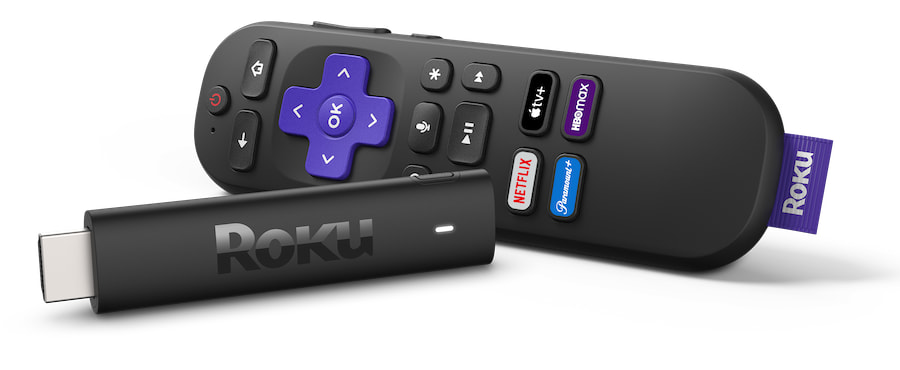
Roku has increased prices across its streaming hardware lineup, reportedly blaming the global shortage of RAM and other components. The Roku Streaming Stick increased from $29.99 to $39.99, the Streaming Stick Plus rose from $39.99 to $59.99, and the Streaming Stick 4K jumped from $49.99 to $79.99. The Roku Ultra climbed from $99.99 to $149.99—a 50 percent increase on a product that directly competes with Apple TV, Google TV, and other network streaming platforms.
The gaming industry is being hit even harder. Effective August 1, 2026, Microsoft raised Xbox console prices worldwide by $100 for models with 512GB of storage and $150 for 1TB versions. The company is also discontinuing its 2TB model. Microsoft said console storage and memory costs had increased by more than 2.5 times and warned that they could double again by the fall of 2027.
That pushes the 512GB Xbox Series S to $499 and the 1TB version to $599, while the Xbox Series X Digital Edition rises to $749 and the standard 1TB Series X reaches $799. These are six-year-old consoles moving farther away from their original launch prices rather than becoming cheaper with age—the opposite of how the console business traditionally works.
Sony raised PlayStation 5 prices on April 2 after surging memory costs placed additional pressure on its hardware business. The standard PS5 increased from $549.99 to $649.99, the Digital Edition rose to $599.99, and the PS5 Pro jumped from $749.99 to $899.99. Even the PlayStation Portal increased from $199.99 to $249.99.
The TV industry is unlikely to escape the fallout. Premium models may have enough margin to absorb some of the added cost temporarily, but mainstream and entry-level televisions are sold on much thinner margins. If component prices keep rising, manufacturers will have limited options: raise retail prices, reduce discounts, trim specifications, delay launches, or cut production.
China to the Rescue or Taking Control?
China-based semiconductor manufacturers are rapidly expanding production as the AI boom strains global supplies of processors, memory, storage, and other critical components. That additional capacity could eventually reduce shortages and help consumer-electronics manufacturers contain rising costs, but describing China as merely coming to the rescue misses the much larger story.
China is no longer simply chasing the United States in artificial intelligence. According to Stanford’s 2026 AI Index, the performance gap between leading American and Chinese AI models has effectively closed, with models from the two countries trading the lead since early 2025. China also leads in AI research publications, citations, total patent output, and industrial robot installations.
Chinese companies including DeepSeek, Moonshot AI, Alibaba, and Z.ai are also producing increasingly capable models that are often cheaper and more openly available than their American competitors. That combination of competitive performance, lower operating costs, and open access is helping Chinese AI platforms gain users well beyond China, including inside the United States.
The United States still holds an advantage in the most powerful AI accelerators. Nvidia’s H200 remains more capable than Huawei’s Ascend 950PR, and China continues to face constraints involving advanced fabrication equipment and high-end chip production capacity. But those restrictions have not stopped China’s progress. They have accelerated Beijing’s drive to replace American processors, software, and manufacturing equipment with domestic alternatives.
Chinese-made processors are projected to account for roughly half of China’s AI-chip market during 2026, while American semiconductor companies have effectively lost their once-dominant position inside the country. China is not merely adding production capacity; it is constructing a competing AI ecosystem that could challenge American control over models, hardware, standards, and global technology infrastructure.
That creates a difficult political and economic dilemma. Greater Chinese production could ease shortages, reduce component costs, and improve product availability. At the same time, becoming dependent on Chinese memory, processors, and manufacturing capacity would give Beijing greater leverage over supply chains used by television, audio, automotive, smartphone, and computer manufacturers.
The real question is therefore not whether China can rescue the semiconductor market. It is whether the United States and its allies are comfortable allowing their largest technological rival to become the supplier that the rest of the world cannot afford to live without.
Note: The following video is from China Central Television.
The Bottom Line
Back in 2021, the global chip shortage was driven primarily by pandemic-related factory shutdowns, supply-chain disruptions, and a sudden surge in demand for computers, gaming consoles, automobiles, and other electronics. AI was not yet a significant factor.
Just as those pressures began to ease, the rapid expansion of artificial intelligence created a new and potentially longer-lasting problem. AI now touches everything from automobiles and consumer electronics to massive data centers that consume enormous amounts of electricity and water. To meet that demand, chipmakers are prioritizing high-margin AI processors, advanced memory, and data-center components while devoting less capacity to conventional DRAM and other chips used in mainstream consumer products.
Until AI-chip demand begins to level off and production of memory and other essential components stabilizes, shortages and higher costs are likely to continue. Some industry forecasts suggest that the pressure may persist through at least 2028.
The companies building AI infrastructure will continue spending because they can afford to. Consumer electronics manufacturers will pass along at least some of their rising costs because they have little choice. The consumer, stuck paying more for TVs, computers, game consoles, streamers, audio components, and smartphones that may offer fewer upgrades for the money, is the one who ultimately loses.
Related Reading:
- AudioBro V2 Adds Conversational AI and Room Memory to Its Hi-Fi Room Optimization Platform
- Why Should AI-Created Music Be Allowed on the Charts at All?
- Amazon Music Opens Alexa+ AI Playlists and Conversational Search to Every U.S. User
- OpenAI’s First Hardware Device Could Be a ChatGPT Speaker With a Camera

















ORT
August 4, 2026 at 10:26 pm
So the inclusion of fArtificial Itsmelligence will raiser prices of gear that most likely doesn’t really need it. I understand that some folk are poster peeps for “IDIOCRACY” but how can someone not know how to turn on a TV, an AVR or even ancient Martian Tech like a CD player and *GASP* use them? Oh yeah. They’re getting more stupider with each quickly made generation.
I shall survive the demise of WiFi because I have records and a record player and CDs and a CD Player but I honestly don’t care about terrestrial radio anymore. Long have I loathed the moronic “morning shows” and “afternoon drive shows”. I find nothing appealing in people even more (hard to believe!) moronic than myself. I don’t listen to me, ergo I don’t listen to “them”. No…Not the giant ants of “THEM!” the giant egos of terrestrial radio shows.
To Hades with fArtificial Itsmelligence, look what it brought us via the cuckold programmers, Founding Fathers that were incorrectly presented as black. The capitalization of any color of the human spectrum that wasn’t “white” and more apologizing for imagined slights and wrongdoings than a group of Cashews at a family reunion.
ORTson Welles