Table of contents
Introduction
The DAP market wasn’t supposed to survive this long. In a world where every smartphone claims to be a portable media powerhouse—and Dongle DACs like the Questyle M15c are giving people shockingly good sound for a fraction of the price—the idea of dropping $3,000 on a Digital Audio Player should feel like buying a Rolls-Royce to drive to the corner store. And yet… here we are. Astell&Kern, FiiO, Cayin, iBasso, Shanling, and ONIX are still cranking out serious hardware for listeners who refuse to let their phones anywhere near their headphones or IEMs.
What’s kept DAPs alive? Real improvements that matter to the die-hard crowd: broader Bluetooth codec support (LDAC, aptX HD, aptX Adaptive—though still not universal aptX Lossless or BLE), higher-resolution screens that no longer look like bargain-bin Android tablets, updated OS platforms that boot fast and crash less, and both single-ended and balanced outputs for demanding full-size headphones and high-resolution IEMs. These advancements don’t just make DAPs relevant—they make them the luxury lane of portable audio. People who invest in an SP4000, M3 Plus, DX340, or an ONIX XM2 aren’t buying gadgets; they’re buying a dedicated listening experience they don’t want their smartphone to pollute.
For that niche—small but very real—the Rolls-Royce metaphor applies. DAPs shouldn’t be as popular as they are in 2025, but for the listeners who treat their music like oxygen, the appeal hasn’t gone anywhere. Long live the irrational pursuit of better sound.
Best DAPs of 2025
Shanling M3 Plus ($469)
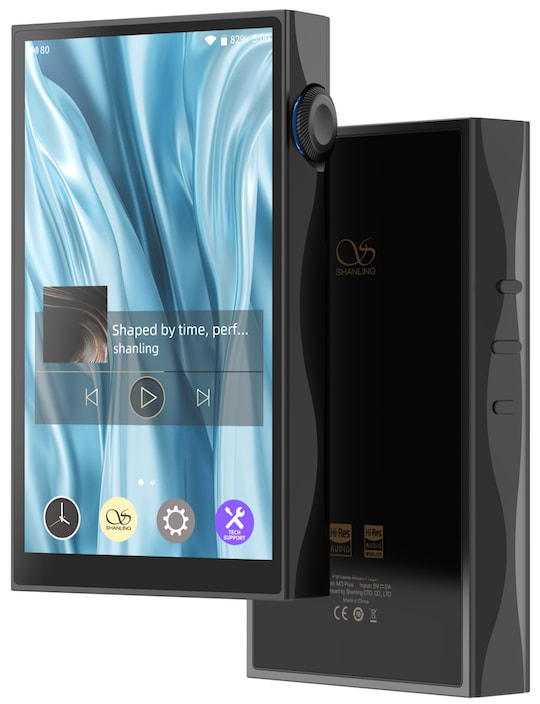
The Shanling M3 Plus hits the sub-$500 DAP sweet spot with a sleek, lightweight design and enough muscle to satisfy most portable setups. Its 4.4mm balanced output delivers up to 800mW into 32 ohms—plenty for the majority of dynamic headphones and saner planars. Inside, Shanling went all-in on a quad-DAC layout using four Cirrus Logic CS43198 chips capable of 32-bit/768kHz PCM and native DSD512, backed by four OPA1612 op-amps plus SGM8262 chips for a clean, low-noise analog stage. AGLO (Android Global Lossless Output) bypasses Android’s usual audio bottlenecks, preserving signal integrity across streaming apps. Android 13 runs smoothly on a Snapdragon 665 with 4GB RAM and 64GB storage, and the microSD slot means your ridiculous FLAC library finally has a home. Bluetooth 5.0 with LDAC allows the M3 Plus to transmit to wireless gear or act as a Bluetooth DAC/amp for your phone or laptop, adding real-world flexibility. Battery life lands around 11 hours balanced and 14 hours single-ended.
The sound is classic Shanling: warm, rich, and inviting without sliding into bloat, with a clean midrange and a wider-than-expected soundstage for the price. It’s compact, well-built, intuitive to use, and versatile enough to serve as a DAP, USB DAC, Bluetooth DAC, or transport. It’s not flawless—the Snapdragon 665 won’t age gracefully, the screen isn’t flagship-sharp, and extremely demanding headphones will expose its power ceiling. But for a stylish, portable player with balanced output, refined tuning, and serious hardware under $500, the M3 Plus delivers excellent value.
Go to full review | $479 at Amazon | HiFiGo
iBasso DX340 ($1,699)
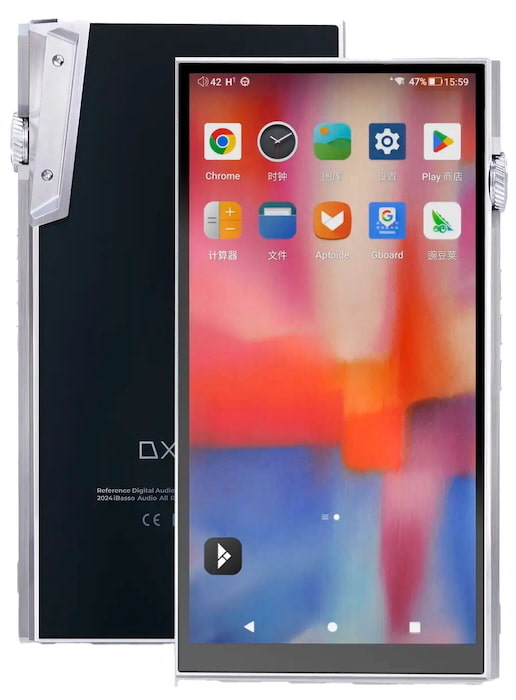
The iBasso DX340 is built for die-hard audiophiles who want desktop-class performance in a portable form. Its DAC array is borderline absurd—in a good way—using 128 discrete PWM DACs arranged in 16 cascaded sets for ultra-fine control, backed by iBasso’s FPGA-Master Gen 3 for harmonic tuning and PCM/DSD decoding up to 32-bit/768kHz and DSD512. Power is equally overbuilt: the stock AMP15 module uses eight BUF634A chips and delivers up to 2150mW at 32 ohms on external power, or 1200mW on battery alone—more than enough for most full-size planars. The optional AMP16 swaps op-amp muscle for Raytheon JAN6418 tubes, complete with a dedicated 22.5V supply and switchable tube/Class AB modes. Battery life averages around 11 hours depending on the module, and the Snapdragon 665/8GB RAM combo keeps Android 13 running smoothly alongside Mango OS for purists.
Build quality is premium, storage hits 256GB with microSD expansion to 2TB, and the player looks as serious as its price tag. At 486 grams, it’s heavy for a portable, and the cost won’t appeal to casual listeners, but the performance, flexibility, and customization options are unmatched. If you want one device that can function as a reference DAP, a transport, and a portable powerhouse that can bully difficult headphones, the DX340 is one of the most complete and over-engineered solutions available.
Go to full review | $1,699 at iBasso
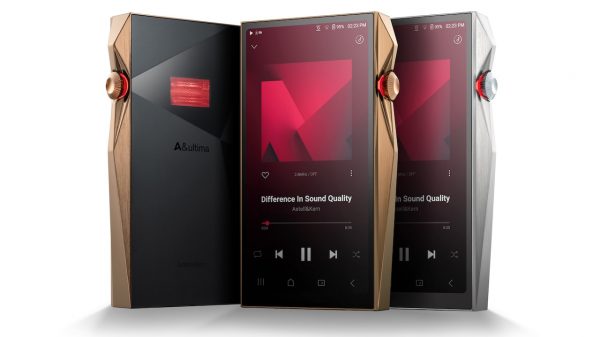
Astell&Kern A&ultima SP4000 ($4,290)
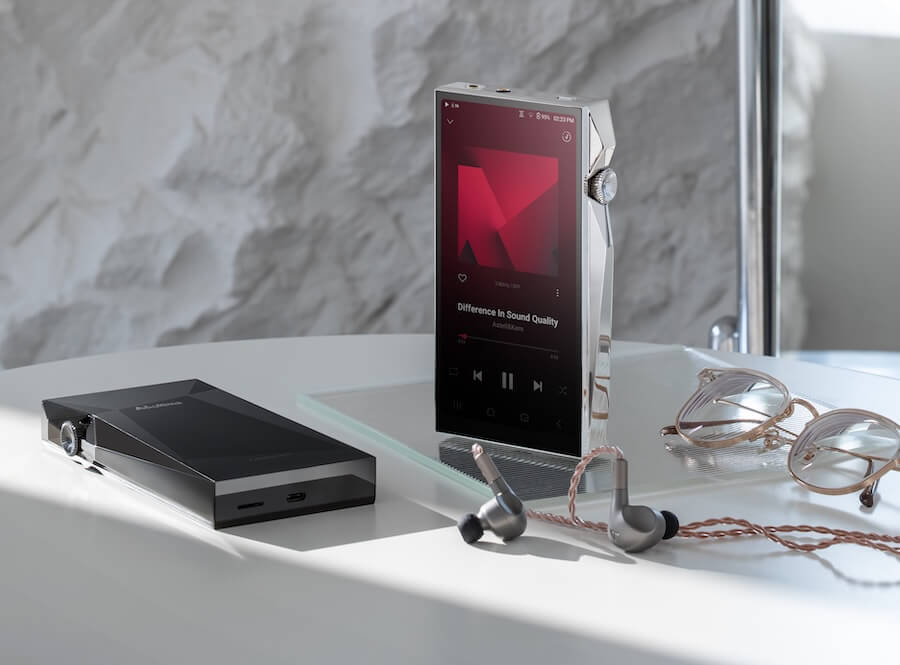
The A&ultima SP4000 tosses out the SP3000’s old 1:2 DAC/modulator setup and replaces it with a true 1:1 Octa Audio Circuit Architecture: one AK4191 digital modulator paired with one AK4499EX DAC per channel. No sharing, no crosstalk, no drama—just a fully discrete quad-DAC layout optimized for purity. A&K backs this with Enhanced Signal Alignment (ESA) to eliminate group-delay smear, plus a 97% quieter LDO regulator that effectively beats the noise floor into submission. Digital and analog stages sit on separate processing paths, and A&K’s Any Layer HDI PCB tech keeps signal integrity pristine even in a compact chassis. Add full Android with Google Play, dual-band Wi-Fi, DLNA, BT Sink mode, LDAC/aptX Adaptive, USB DAC support, 256GB onboard storage with microSD expansion to 1.5TB, and a 99.9% pure copper shield can—the kind of overkill that actually matters.
The result is a reference-grade flagship designed to drive any headphone or IEM with authority. The SP4000 supports PCM up to 32-bit/768kHz and native DSD512, and its wireless performance finally meets the standard its wired stage set years ago. Imaging, dynamics, clarity, and tonal cohesion are all elite, backed by a noise floor so low it’s effectively invisible in real-world listening.
Learn more | $4,290 at Audio46
The Bottom Line
Taken together, players like the Shanling M3 Plus, iBasso DX340, and Astell&Kern A&ultima SP4000 sit inside a DAP ecosystem that now includes at least 20 genuinely solid options between roughly $250 and $4,300—and they all deliver a far better listening experience than any smartphone + Dongle DAC combo in terms of output power, ergonomics, local file support, and long-session usability. The fact that this tier not only exists but continues to grow is proof that the Head-Fi revolution isn’t a fad; it’s a mature, global hobby with plenty of headroom left, and DAPs have become the dedicated tools for people who are done compromising their music on a phone that’s also juggling email, notifications, and doomscrolling.
Related Reading:
- Best Dongle DACs: Editors’ Choice
- Best Headphones: Editors’ Choice
- Most Recent Editors’ Choice Awards
- Most Recent DAP News and Reviews